How much alcohol does kombucha contain?
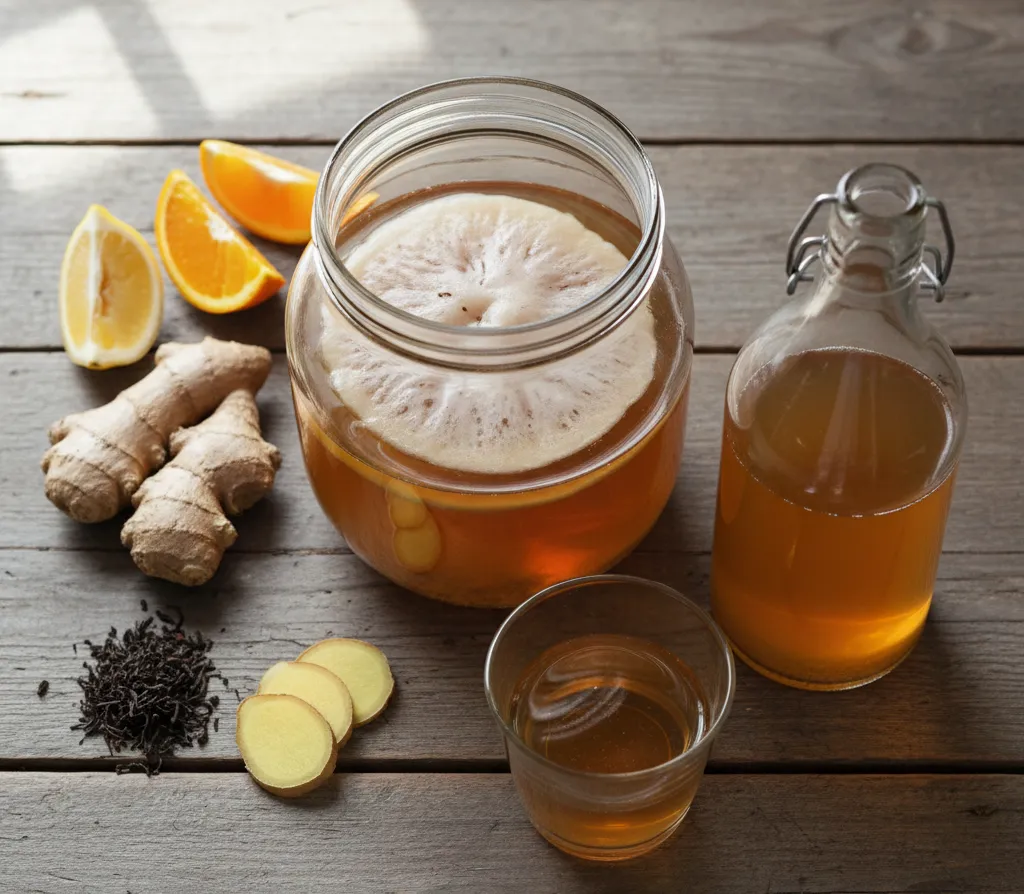
Yes — kombucha does contain alcohol, because ethanol is a natural byproduct of fermentation. This isn’t a flaw or a sign that something went wrong: every fermented food and drink, from bread to yogurt to kombucha, produces some alcohol during the process.
How much alcohol does it actually contain?
Most commercially sold “traditional” kombucha stays under 0.5% alcohol — the threshold below which many countries’ regulations still classify a drink as “non-alcoholic.” Home-brewed kombucha is more variable, and depending on conditions can exceed that threshold, especially:
- During a long F2 phase (the longer it ferments in a sealed bottle, the more sugar the yeast converts into alcohol as well as carbon dioxide)
- With high-sugar flavoring (more “food” for the yeast)
- At warmer fermentation temperatures (faster microbial activity)
- If the starter culture is yeast-dominant
Why does alcohol form during fermentation?
Chemically, fermentation is the result of two processes happening in parallel:
- Yeasts convert sugar primarily into carbon dioxide and ethanol.
- Acetic acid bacteria further oxidize that ethanol into acetic acid — this gives kombucha its characteristic tangy taste.
The final alcohol content depends on the balance between these two processes. If the bacterial population is more active and has enough time to “work,” it converts most of the ethanol further into acid, keeping alcohol levels low. A shorter F1 combined with a longer, warmer F2, on the other hand, can favor a rise in alcohol.
Can you reduce the alcohol content at home?
A few practical tricks if you want to keep it low:
- A longer F1 phase, with a shorter or skipped F2 — alcohol levels tend to stay lower during primary fermentation than during a sealed-bottle F2.
- Less sugar in the flavoring, so there’s less “food” for the yeast during F2.
- A cooler, but still adequate, temperature — slower fermentation gives a more predictable result.
- A shorter F2, with frequent tasting so you can stop the process in time (refrigeration) before too much alcohol forms.
That said, without measuring equipment, you can’t know the exact final alcohol content at home. If this is a critical factor for you (e.g. pregnancy, breastfeeding, or an alcohol-free lifestyle), the safest choice is a commercial product with a lab-verified, labeled alcohol content, rather than a home brew.
In summary
Trace alcohol content is a natural, unavoidable part of kombucha, not a quality defect. For most people this amount is negligible — but if you need to know exactly how much alcohol you’re consuming for any reason, choose a verified, labeled commercial product instead of a home brew.